
Sleep-Disordered Breathing
A sleep disorder prevents you from getting healthy and restful sleep. Many sleep disorders are undetected because a person can slowly become accustomed to the symptoms. For example, waking up tired or falling asleep reading a book might be signs of a sleep disorder.
Frequent Asked Questions
What is Sleep-Disordered Breathing?
Sleep-disordered breathing (also known as sleep apnea or upper airway resistance syndrome) is a serious sleep disorder that impairs your breathing while asleep. Anyone can have sleep-disordered breathing, even children.
Symptoms of sleep-disordered breathing may include:
- Headaches
- Lack of energy
- Daytime sleepiness
- Snoring
- Difficulty falling asleep and staying asleep
- Difficulty breathing while asleep
What causes Sleep-Disordered Breathing
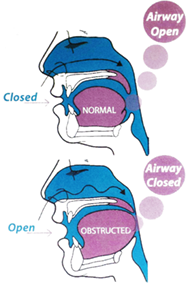
Snoring and sleep apnea occur when the soft tissue structures of the upper airway collapse, resulting in a narrowed airway opening. The snoring sound is caused by the vibration of these tissues. Complete closure of the airway is an “apnea event,” which means that no air is getting into the lungs.
The causal factors may be:
- Structural – narrow jaw, large tongue, enlarged tonsils, enlarged adenoids, thick soft palate, small nasal valve, or deviated septum
- Other factors – allergies, over consumption of alcohol, sedatives, smoking, and disruption of normal sleep patterns, or decreased lung capacity (often caused by obesity)
What problems can Sleep-Disordered Breathing cause?
- Poor performance at work or school
- Forgetfulness
- Irritability
- Depression/Anxiety
- Workplace or auto accidents
- High blood pressure
- Diabetes
- Stroke
- Heart failure and heart attack
How do I know if I am at risk or may have Sleep-disordered Breathing?
A helpful diagnostic tool to help determine if you have or are at risk for sleep-disordered breathing is the Epworth Sleepiness Scale. A diagnosis of sleep-disordered breathing should be confirmed by a sleep study carried out in a sleep center designed for this type of testing.
What can be done if I have Sleep-Disordered Breathing?
Once it has been determined you have sleep-disordered breathing, a physician will determine treatment which may include:
- CPAP (continuous positive airway pressure)
- Surgery
- Oral sleep appliance